I’m amazed whenever I look in the mirror and am confronted by an old man.
What makes the child we were, and the person we are, feel the same inside? What creates the apparent solidity of our inner self?
Some claim we are our own architects. That’s true, to an extent, but our identity has a more indigenous component, one that is partially hidden, but always present. We come closest to witnessing this inner essence in “moments of being,” a term borrowed from Virginia Woolf’s posthumously published autobiographical essays.
Moments of being are uninvited, transcendent experiences. Such moments happen suddenly, without warning, leaving us with a taste of something we can’t quite put our finger on, hinting at the essence of who we are.
Can you recall such moments in your life?
I can think of two in mine:
The first happened at age six while playing tag with friends in the front yard of my parents’ home. A barefoot summer lawn is a sensory masterpiece—cool, spongy, fragrant, and inviting. Fleet-footed, I darted about, breathlessly evading being tagged. Suddenly, a veil lifted. Something inside spoke to me, saying, “I am me.” I had no idea what that meant. It was, at once, frightening, mysterious, and undeniable. It froze me in my tracks.
A six-year-old is accustomed to parents taking care of things. However, for the first time, I realized I was an independent person, responsible, vulnerable, and alone. The experience seared into my consciousness. I thought about it for weeks—actually, for years.
My second moment of being was equally unexpected. I was fifty-one, practicing a sitting meditation, when suddenly, I “dropped in.” Like my childhood experience, the moment defies explanation. But a veil lifted, revealing a presence beyond thought. I surrendered to it, and it spoke to me, saying, “All is one.”
The moment left me with a new understanding about myself and the world—everything is connected. This was the antithesis of my earlier experience of independence and vulnerability, and it was even more powerful.
Throughout my adult life, I’ve sought joy, meaning, and belonging amid circumstances beyond my control. After the second moment, the quest for answers became unnecessary. In its place was a new understanding, informing me that I was a part of something larger than myself. It became clear that my “Being” is a progression, from “I,” to “We,” to “One,” a progression discovered through surrender rather than something sought after.
The “moment” changed me, liberating my fears of mortality and replacing them with feelings of solidarity with a united whole that changes form, but continues forever.
My “moments of being” continue to live inside me. Perhaps Virginia Woolf felt the same way, leaving a pertinent question in her diary:
“Is it not possible—I often wonder— that things we have felt with a great intensity have an existence independent of our minds; and are in fact, still in existence?”
The quote reminds me of Helen Keller’s beautiful words: “All that we love deeply becomes a part of us.” Transcendent events remain with us; the same is true of every person we have ever loved.
Moments of being illuminate the unchanged person behind the mirror. Strangely, they are not at our command. They come to us spontaneously, often when least expected. The best we can do is open our hearts to make room for them.
The search for meaning and transcendence is universal. It strikes me that the proper function of such inquiries is to reveal the truth of unity and the power of love.
If love is what we are, it explains why our inner essence never changes.
—————————————————————
Installments of The Secret Within can be found here.
Former blog posts can be found here by subject category and here chronologically.
You can subscribe to my latest posts by filling in your email address at the bottom of this page.
My first book, Towards A Life Well-Lived, can be purchased by clicking this link. Proceeds from sales are donated to Peace In Schools, a Portland, Oregon-based organization that supports mindfulness training in high schools.
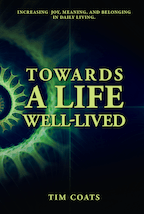
 Towards A Life Well-Lived