
Antifragile is a term coined by Nicholas Taleb, a mathematical statistician whose work centers on problems of randomness, probability, complexity, and uncertainty (which sounds a lot like the circumstances of our lives).
His book, Antifragile: Things That Gain From Disorder, is a little dry, so I’ll save you the trouble of reading it by summarizing his thesis in a sentence: Develop life-routines that have little downside, but big potential payoffs when the unexpected happens.
Why is this important?
Well, as Yogi Berra reminded us, “Predictions are hard, especially about the future.” I’ve never been very good at predictions, but I like to be prepared, so I resonate with Taleb’s approach.
Here are some examples:
1. I’ve always been overweight, but that didn’t stop me from lifelong participation in endurance sports like distance running and cycling. At 63, I had a heart attack caused by an 80% blockage in my widow-maker artery. I was lucky; there was no lasting damage. But it wasn’t really luck that saved me. My cardiologist told me that lifelong exercise likely led to vascular adaptations that saved my life.
2. Financial planning is another example. I’ve never had meaningful investments in the things that make headlines. Instead, MJ and I “paid ourselves first,” meaning we set up an automatic deduction at the beginning of every month to a diversified investment account. Over many years, that money grew into a meaningful retirement nest egg. When the AI bubble bursts someday, it won’t worry us too much. Monthly savings, conservative planning, and a long-term focus are antifragile investment strategies.
The key to successful antifragile practices is to identify areas where small routine actions can pay off in a big way if the unexpected occurs. Can you think of any?
Three areas rise to the top for me: Body, Mind, and Spirit. If the body, Mind, and Spirit are antifragile, a person can weather any storm.
Here’s my approach:
Body
I make sure to stretch and sweat every day. A 20-minute stretching routine prevents lower back flare-ups. Additionally, I go for walks around the neighborhood, making sure to break a sweat.
Mind
I read at least two books every month. Writing a weekly blog also helps.
Spirit
I am not religious, but I seek out wisdom literature and practice mindfulness. These practices help shift my focus to areas beyond myself.
When I was a young man, I believed that I controlled the important circumstances of my life; that discipline and hard work determined one’s future. Before long, I discovered that that’s only part of the story. Sometimes it’s sunny, other times it’s cloudy, and sometimes, despite all of our plans and efforts to the contrary, it just effing pours on our parade.
But if we’ve pursued anti-fragility in the really important areas of life, we find we can weather the inevitable storms. Hemingway was right: “The world breaks everyone, and afterward, many are strong in the broken places.” That’s who I aspire to be!
Here’s the funny thing about antifragile habits: They always seem boring, until they’re not.
Try adding them to your routine and see what happens!
————————————————————
Former blog posts can be found here by subject category and here chronologically.
You can subscribe to my latest posts by filling out your email address at the bottom of this page.
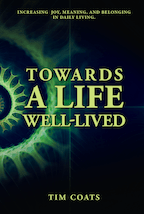
My first book, Towards A Life Well-Lived, can be purchased by clicking this link. Proceeds from sales are donated to Peace In Schools, a Portland, Oregon-based organization that supports mindfulness training in high schools.
Stay tuned for my new book, The Secret Within, which will be available soon.
 Towards A Life Well-Lived