We R 1, whether we embrace it or not.
We’re sequestered on a blue marble catapulting through space. No doubt there’s other intelligent life in the universe, but even if the closest star had an Earth-like planet, a round-trip visit would take eight and a half years, traveling at the speed of light. To put that in perspective, Voyager 1 has been shooting through space at 10 miles/sec for 47 years, and has only traveled one light day!
We appear to be stuck with one another!
That presents a dilemma. I’m an optimist, but the bus we’re on is going the wrong way. Social media, the purported grand connector, is a primary agent of divisiveness. Phones substitute for friends. Artificial intelligence is booming. Social intelligence is scarce. Inclusion was a significant priority during my work years. It wasn’t perfect, but a lot of good was achieved. Times change!
Recently, at the cabin, we had breakfast at The Robin’s Nest, the best spot in a hundred-mile radius. It’s located in the middle of nowhere, about 13 miles from town in a converted home situated along Cty Highway B. The owners live upstairs. The place is so popular that it’s not unusual to wait an hour to be seated and served. There are no complaints.
When MJ and I entered the crowded restaurant, we immediately noticed a black family. Seeing a black family in the Hayward area is about as likely as finding a hundred-dollar bill on the sidewalk. The Ojibwe reservation is the only source of diversity in the area.
At The Robin’s Nest, we were seated at a table for two with a window facing the parking lot. The car parked directly in our view had North Dakota plates. Maybe I was conservative on that 100-mile radius claim?
Anyway, MJ pointed out the license plate. It read: We R 1. “Sounds like your blog,” she quipped. “Let’s watch and see who it belongs to!”
You’ve already guessed the answer!
In college, I secured a summer job in downtown St. Louis, working on a maintenance crew for the Lewis Howe Company in the factory that produced the antacid Tums.
When I reported to work on my first day, I found that I would be the only white person on the maintenance crew. I soon learned that the rest of the crew hailed from East St. Louis, the most dangerous city in the nation at the time.
Later that week, I was invited to an unscheduled break in an isolated restroom on the 5th floor. Upon my arrival, the entire crew was present. This one dude comes up to me and says, “I bet this white boy has never been shot!” I must’ve turned a whiter shade of pale, because the whole gang broke out in laughter. I finally mustered a “Hell no, I’ve never been shot!” to even more laughter.
The guys then started pulling up their shirts. Most had circular puckered scars from bullet wounds. Another guy then pulled a palm-sized 25-caliber semi-automatic pistol from the front pocket of his work uniform. “You ever see one of these, white boy?” I just stared. He then propped open the window to pop off a few rounds into busy downtown St. Louis. Pedestrians were everywhere, and I begged him not to do it, telling him I knew the gun was real.
Long story short, I spent the rest of the summer keeping my head down. The 1970s were a different era. The racial and socioeconomic gap between me and the crew was huge. Nevertheless, I was ultimately accepted. I even became buddies with a guy named Roosevelt. Everyone called him Rosy.
As summer drew to a close, I invited Rosy to a party at my parents’ house, where I was living for the summer. “Where do you live?” Rosy asked. I told him Kirkwood (an affluent white suburb), and Rosy started laughing. “Are you crazy?” he asked. “I’ll either be killed or thrown in jail there!”
I assured him that wasn’t the case, but Rosy was having none of it and countered. “Ok, I’ll come to a party at your house if you come to a party at mine!”
“Not a chance,” I replied. “I will be killed if I go to your house.” It was common knowledge in the white community that one should never go to East St. Louis. Furthermore, if you were unlucky enough to get a flat tire on the raised interstate that skirted the town, you should keep driving on the rim.
I never saw Rosy after that summer. I graduated from college and landed an executive position. I wonder how his life turned out.
So here we are in 2025, fifty years later. It used to be that racial and religious differences were the primary sources of hate, but as a clever species, we’re adding to our repertoire.
We R 1 is clearly aspirational, but I like the vibe.
I’m not into customized license plates, but I might just copy that North Dakota family and get one the next time mine are up for renewal.
————————————————
Former blog posts can be found here by subject category and here chronologically.
You can subscribe to my latest posts by filling out your email address at the bottom of this page.
My first book, Towards A Life Well-Lived, can be purchased by clicking this link. Proceeds from sales are donated to Peace In Schools, a Portland, Oregon-based organization that supports mindfulness training in high schools.
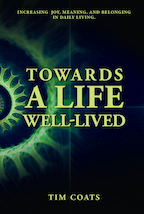
Stay tuned for my new book, The Secret Within, which I expect to make available in time for the Holidays.
 Towards A Life Well-Lived
Interesting! Don’t remember ever hearing u tell this story. By the way – did u go to Farm Aid concert ? 2Interesting articles
LikeLike
Did not go to the concert; all day/night shows dont hold the appeal they once did! 😎
>
LikeLike